
You were tired at nine. You got into bed at eleven and now it's 12:40 and you're replaying a conversation from Tuesday, wondering whether the tone of one reply meant something, and calculating how bad tomorrow will be on five hours of sleep. The calculating makes it worse. You know that, which also makes it worse.
Nighttime anxiety isn't a sleep problem that shows up at bedtime. It's an attention problem. All day there's noise, tasks, and people. At 11 p.m. there's nothing, and your mind goes looking for the unfinished item. Tiredness lowers the filter that would normally tell you a 1 a.m. thought is not a reliable narrator.
Start two hours before bed
Nothing you do in bed will fix a nervous system that was still running hard at 10:45. The routine has to begin while you're still up.
Get the worry out of your head and onto paper
Ninety minutes before bed, spend ten minutes writing down everything unresolved. Not solutions. Just the list. Next to each item, write the next physical action and when you'll do it. "Email Dana about the invoice, 9 a.m. Thursday."
This works because a lot of nighttime rumination is your brain rehearsing something so it won't be forgotten. Once there's a plan on paper with a time attached, the rehearsal has somewhere to stop.
Drop the lights
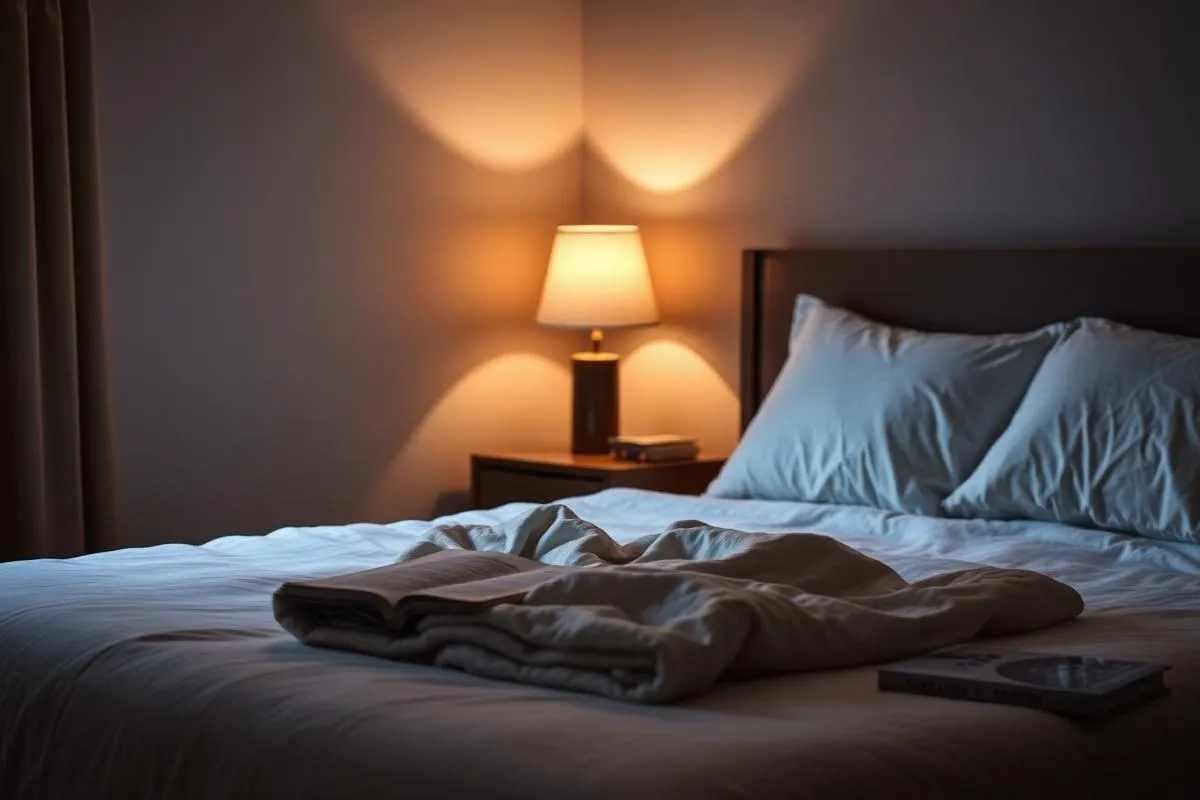
Overhead lights tell your body it's still daytime. Switch to lamps after dinner. This sounds too small to matter and it's one of the changes people report back on most.
Let your body finish what it started
Anxiety is physical. A twenty-minute walk, some stretching, or a hot shower gives the stress response somewhere to go. The shower has a second effect, because the drop in body temperature afterward is itself a sleep signal.
The last hour
Put the phone somewhere else. Not face-down on the nightstand. Another room, charging. The problem isn't only blue light. It's that your phone is a machine for delivering unresolved things at the exact moment you have no capacity to resolve them.
Do the same small sequence every night. Dishes, teeth, five pages of something boring in print. The content doesn't matter. Repetition is what turns it into a cue your body recognizes.
Keep the room cool and dark. Around 65 degrees suits most people. If you live somewhere noisy, a fan or white noise gives your attention something flat to rest on.
Once you're in bed
Slow your exhale. Breathe in for four, out for six or eight. The long out-breath is the part that shifts you toward the calmer branch of your nervous system. Ninety seconds of this does more than ten minutes of trying to relax.
If your mind starts racing, stop arguing with it. Trying to suppress a thought reliably makes it louder. Try labeling instead: "planning," "replaying," "predicting." Then move your attention to something physical, like the weight of the blanket or the temperature of the air on your face. You'll drift back to the thought. Label it again. That's the whole practice.
And if twenty minutes pass and you're still wide awake, get up. Sit in dim light and do something dull until you feel heavy, then go back. Staying in bed frustrated teaches your brain that the bed is where you lie awake.
The two rules that matter most
Keep your wake time the same every day, including weekends. It's the strongest single lever you have over your sleep, and sleeping in on Sunday is why Monday night is so hard.
Don't chase lost sleep with naps and early bedtimes. A rough night is survivable. Trying to make up for it moves your clock and turns one bad night into a bad week.
When to get help
If this has been going on for months, if you're waking at 3 a.m. with a jolt of dread most nights, or if the worry runs through your days as well as your nights, a routine alone won't be enough. Cognitive behavioral therapy for insomnia has strong evidence behind it, and treating the underlying anxiety usually improves sleep as a side effect. You can read about how we work with anxiety here.
Give any new routine two weeks before judging it. The first few nights often feel worse, because you've removed the distractions you were using to fall asleep. That passes.
If you'd like to talk this through with someone, I offer a free 15-minute phone consultation. You can reach me through the contact page or call (408) 827-1006. No pressure to book anything after.