
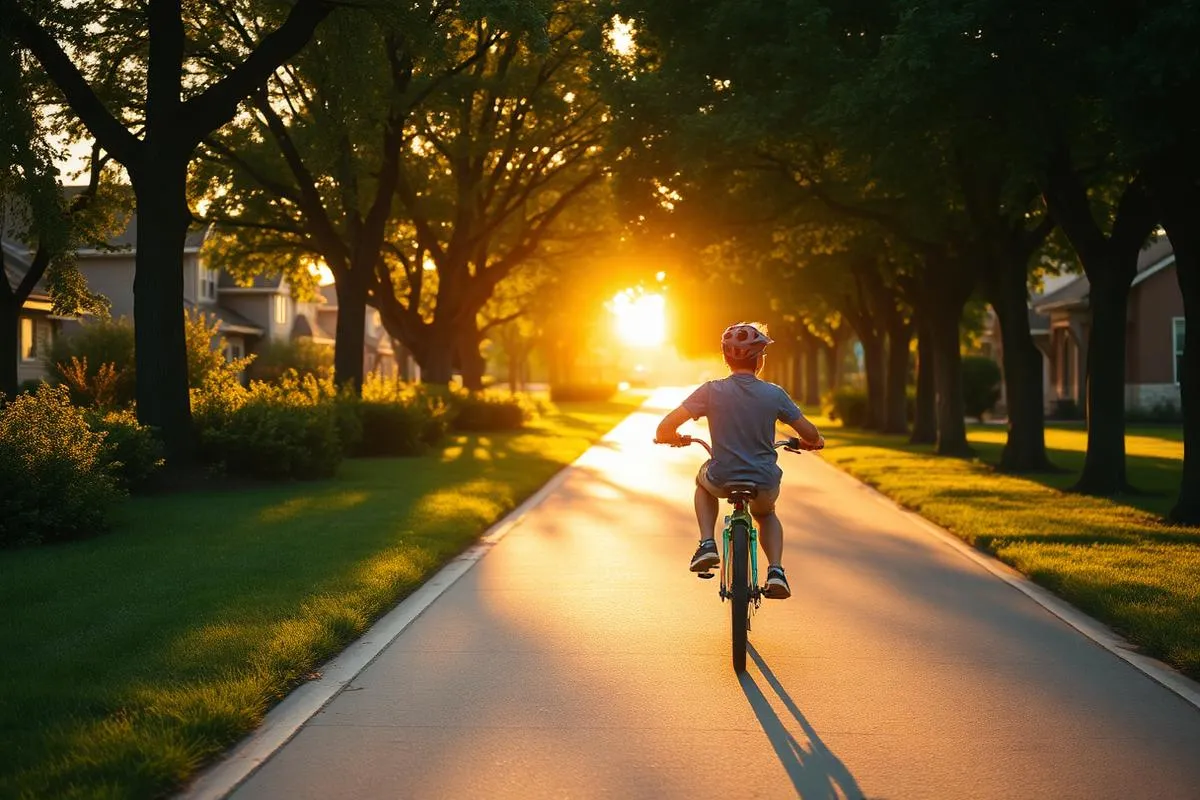
Every August I hear a version of the same thing. Summer started with everyone relieved. By week three the teenager was waking up at two in the afternoon, and by the end of it the house had turned tense and nobody could say exactly when.
The break itself isn't the problem. School provides a wake time, a place to be, a set of small daily accomplishments, and a steady supply of people. Remove all four at once and mood usually follows them down.
Sleep is the one thing worth protecting
Teenage circadian rhythms already run late. Without a school alarm, a lot of kids drift to a 3 a.m. bedtime within two weeks, and that shift affects mood, appetite, irritability, and how they handle small frustrations.
Pick a wake time and hold it, give or take an hour. Ten o'clock instead of six-thirty is a fair trade for summer, and it keeps their clock close enough that the return to school in August is a nudge rather than a crisis. The wake time matters more than the bedtime, because it's the one you can actually enforce and it drags the bedtime along behind it.
The other lever is morning light. Getting outside within an hour of waking up does more for a teen's sleep schedule than any conversation about screens.
Three anchors, not a schedule
A color-coded hourly plan will be abandoned by June 12th and will make everyone feel like a failure. What holds up is three fixed points a day with open space around them.
- A consistent wake time.
- One thing they're responsible for. A shift, a class, a younger sibling on Tuesdays, a garden, walking a neighbor's dog.
- One real social contact, in person where possible.
Everything between those can be genuinely unplanned. Boredom is useful. Teenagers who never sit in an empty afternoon don't get much practice figuring out what they actually want to do.
Responsibility does more than it looks like it should
A job at a smoothie place isn't about the money. It's a place where somebody expects them, where they're competent at something, and where their identity isn't a GPA. I've watched fifteen-year-olds change more over one summer of bussing tables than over a year of enrichment programs.
If a job isn't available, volunteering, coaching a younger team, or a standing household job with a real deadline all do similar work. What matters is that someone besides their parents notices whether it got done.
Screens, without the war
A blanket time limit tends to produce a negotiation every single day. Try sequencing instead. Screens come after the three anchors. Once they're up, out, and have done their thing, the afternoon is theirs.
The part worth being firm about is phones overnight. Charging outside the bedroom protects sleep more than any app limit, and it removes the 1 a.m. group chat that quietly drives a lot of summer anxiety.
Also worth watching: whether their screen time is social or solitary. Four hours gaming with friends on voice chat and four hours alone scrolling are different activities with different effects.
Loneliness hides behind "I'm fine"
School delivers friendship without anyone having to organize it. Summer requires initiating, and a lot of teens would rather stay home than risk being the one who asks and gets left on read.
You can help by lowering the stakes. Driving is a legitimate contribution. So is "we're doing pizza Thursday, invite whoever." Recurring plans beat one-off ones, because nobody has to ask twice.
Plan the last two weeks in advance
The re-entry is where families come undone. Start shifting the wake time back fifteen minutes a day about two weeks out, get the supply run done early, and leave the last weekend deliberately empty. A teen who walks into the first day rested handles it very differently from one who's been up until 4 a.m. all August.
When it's more than a lazy summer
Some withdrawal is normal. Watch for the pattern where they've dropped the things they used to love, seem flat rather than relaxed, and don't perk up even around close friends. Weight changes, constant irritability, or comments about not mattering deserve attention now rather than in September. That's what therapy for adolescents is for, and summer is often the easiest time to start because the schedule is open.
A good summer for a teenager isn't a productive one. It's one where they slept enough, got responsible for something small, saw their friends, and had a few afternoons with nothing in them.
If you'd like to talk this through with someone, I offer a free 15-minute phone consultation. You can reach me through the contact page or call (408) 827-1006. No pressure to book anything after.